


Coaxial Cable: The Precision Conduit for Signals
2025-12-26 15:48In a world increasingly dominated by wireless technology, the Coaxial Cable (often abbreviated as "coax") remains an indispensable and superior medium for transmitting high-frequency electrical signals with minimal loss and interference. From delivering cable television and broadband internet to connecting critical radio, satellite, and cellular infrastructure, coaxial cable is engineered for one primary purpose: to preserve signal integrity over distance. Its unique, layered construction creates a self-contained transmission line, shielding the precious signal within from the electromagnetic chaos of the outside world. For applications where reliability, bandwidth, and signal clarity are non-negotiable, coaxial cable continues to be the gold standard.
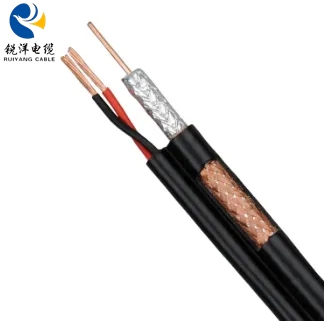
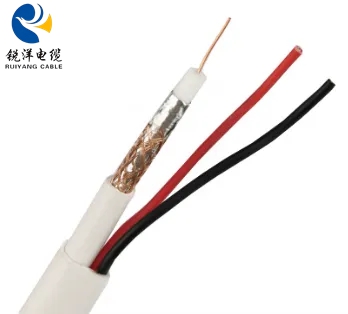
Anatomy of a Signal Preserver: Layered Construction
The effectiveness of coaxial cable stems from its precise, concentric design. From the center outward:
Center Conductor: A single solid or stranded wire, typically made of copper, copper-clad steel (CCS), or silver-plated copper. This carries the signal voltage. Stranding increases flexibility for patch cables.
Dielectric Insulator: A layer of non-conductive material (e.g., solid polyethylene, foam polyethylene, or air-spaced plastic) that surrounds and precisely spaces the center conductor. It maintains a constant impedance (typically 50 or 75 Ohms) and prevents the signal from shorting to the shield.
Shield: The critical barrier against interference. It consists of one or more layers:
Braid Shield: A mesh of woven bare or tinned copper wires. Provides good flexibility and moderate shielding effectiveness (e.g., 70-95% coverage).
Foil Shield: A thin layer of aluminum bonded to a polyester backing. Provides 100% coverage against high-frequency interference but is less flexible.
Combination Shields (e.g., RG-6): Most modern cables use both a foil and a braid shield (dual or quad-shield) for maximum protection against both Electromagnetic Interference (EMI) and Radio Frequency Interference (RFI).
Jacket: The tough outer protective layer made of PVC, polyethylene (PE), or low-smoke zero-halon (LSZH) materials. It protects against moisture, abrasion, UV radiation (for outdoor use), and physical damage.
The Science of the Shield: How It Defeats Noise
The coaxial design is a functional application of the Faraday Cage principle. The outer shield, when properly grounded at the receiving end, performs two key functions:
Contains the Signal: The electromagnetic field generated by the signal on the center conductor is confined between the conductor and the shield, preventing it from radiating out and causing interference to other devices.
Excludes Interference: External electromagnetic noise is intercepted by the shield and harmlessly diverted to ground before it can induce a current on the center conductor and corrupt the desired signal. This is measured as Shielding Effectiveness in decibels (dB).
The Impedance Imperative: 50 vs. 75 Ohms
A cable's characteristic impedance is its most important electrical property, determined by the ratio of the diameters of the inner conductor and the shield, and the dielectric constant of the insulator.
75 Ohm Cable: The standard for video and broadcast applications (cable TV, satellite, CCTV). Optimized for minimum signal loss (attenuation) at a given frequency, making it ideal for carrying signals from an antenna or receiver.
50 Ohm Cable: The standard for data and radio frequency (RF) applications (computer networks, two-way radios, cellular systems, test equipment). Represents a compromise between low loss and high power-handling capability.
Common Types and Their Kingdoms
RG-6/U: The ubiquitous standard for residential satellite, cable TV, and broadband internet. Features a dual shield (foil + braid) and is widely available.
RG-11/U: A thicker, lower-loss version of RG-6, used for longer cable runs in large homes or commercial installations.
RG-59/U: An older, thinner standard with higher loss, now largely replaced by RG-6 but still found in some legacy CCTV systems.
LMR®-Series (e.g., LMR-400): A class of low-loss, flexible cellular and radio cables with a solid copper core and advanced foamed dielectric, essential for professional wireless infrastructure.
Triaxial Cable: Features a second braid shield over the primary shield, providing even greater noise immunity for critical broadcast and measurement applications.
Installation and Termination: The Final Hurdle
A coaxial cable's performance can be ruined by poor installation.
Bending Radius: Avoid sharp bends (kinks) which deform the dielectric and change the impedance, causing signal reflections.
Connectors: Must match both the cable type and impedance (e.g., F-type for CATV, BNC for video/test equipment, N-type for RF). Proper crimping or compression is essential for maintaining shield continuity.
Grounding: For permanent outdoor installations (like satellite dishes), the cable shield must be properly grounded to protect against lightning-induced surges.
While fiber optics surpass it in bandwidth and distance for data backbones, and Wi-Fi offers convenience for mobility, coaxial cable retains a dominant position where cost, reliability, and high-frequency performance intersect. Its elegant, self-shielding design solves the fundamental problem of clean signal transmission in a noisy world. From the cable box in your living room to the antenna on a cell tower, coaxial cable delivers the signals that connect us with clarity and reliability, proving that sometimes the best technology is the one perfected over decades of steady, shielded service.
>>> Ruiyang Group's main Coaxial Cables
● RG6 Bare Copper Conductor Coaxial Cable
● Bare Coppper Core Coaxial Cable With ETL ROHS