


Cold Shrink Cable Accessories: Performance Characteristics, Advantages, and Limitations
2026-03-24 10:36Cold shrink cable accessories—including terminations and joints—represent one of the most significant advancements in medium and high-voltage cable connection technology. Unlike traditional heat shrink or tape-based systems, cold shrink accessories utilize pre-expanded elastomeric components that contract onto the cable upon removal of a supporting spiral core. This design eliminates the need for open flames or external heat sources during installation, offering unique performance characteristics. This article provides a comprehensive examination of cold shrink cable accessory performance, their advantages, and their inherent limitations.
1. Understanding Cold Shrink Technology
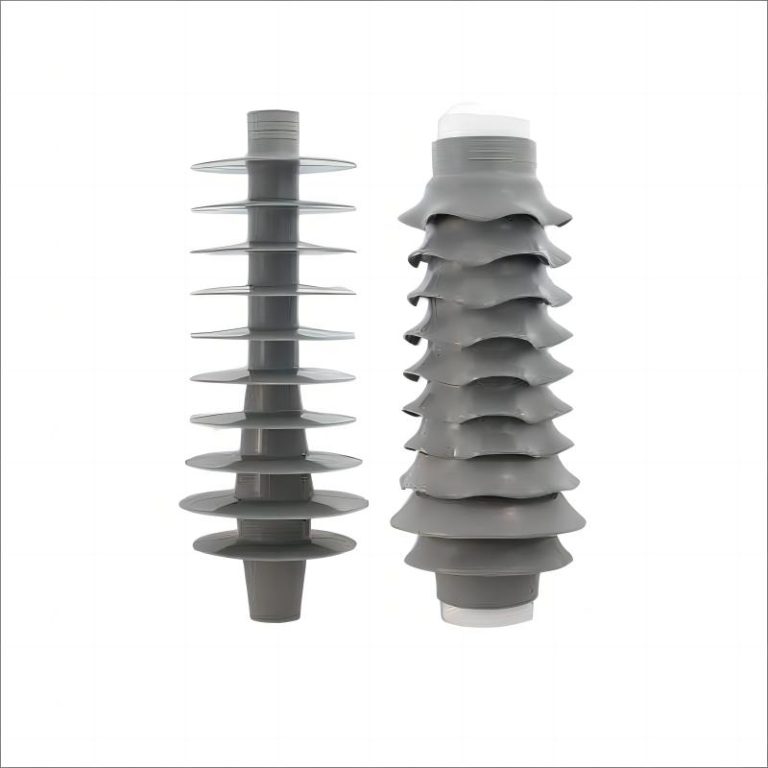
Cold shrink technology relies on the elastic memory of high-performance elastomers. During manufacturing, silicone rubber or EPDM components are pre-expanded and held in place by a removable plastic or polypropylene spiral core. When positioned correctly over the prepared cable, the installer simply unwinds the core, allowing the component to contract uniformly and snugly onto the cable surface.
This technology contrasts sharply with heat shrink alternatives, which require torches or hot air guns to activate thermal contraction, and with tape-based systems that demand significant installer skill for consistent results.
2. Core Performance Characteristics
Electrical Performance
Cold shrink accessories deliver exceptional electrical performance across their rated voltage ranges. For medium-voltage applications (typically 8.7kV through 35kV), these accessories maintain partial discharge-free operation throughout their service life. The uniform radial pressure exerted by the pre-expanded material ensures intimate contact between the accessory and cable insulation, eliminating air gaps where partial discharge could initiate.
For high-voltage applications up to 500kV, cold shrink terminations incorporate sophisticated stress control systems—either geometric stress cones, high-permittivity materials, or non-linear resistive compounds—that manage electric field distribution at the shield termination point. The consistent material properties and precise manufacturing tolerances ensure reliable performance under operating voltages and transient overvoltage conditions.
Environmental Sealing
One of the defining characteristics of cold shrink accessories is their exceptional sealing capability. The uniform radial compression creates a watertight barrier that prevents moisture ingress—the leading cause of long-term cable accessory failure. The sealing pressure remains consistent over decades of service because the elastomer maintains its elastic properties without the relaxation that affects other materials.
For direct burial applications, cold shrink joints provide reliable protection against groundwater penetration. The multi-layer sealing system, often incorporating mastic sealing strips at cable entry points and self-fusing silicone rubber tapes at critical interfaces, creates a hermetic barrier that exceeds the sealing performance of many alternative technologies.
Mechanical Robustness
Cold shrink accessories offer excellent mechanical protection for cable connections. The elastomeric body absorbs vibration, accommodates thermal expansion and contraction, and provides resistance to impact and abrasion. This mechanical resilience is particularly valuable in applications subject to dynamic loads, such as wind turbine towers or industrial facilities with significant equipment vibration.
The interference fit—typically 1 to 2.5mm between the insulation diameter and stress cone inner diameter—ensures that the accessory remains firmly in place even under fault conditions where electromagnetic forces attempt to separate components.
3. Key Advantages of Cold Shrink Technology
Installation Simplicity and Speed
Cold shrink accessories dramatically simplify the installation process compared to traditional methods. Without the need for torches, hot air guns, or complex tape wrapping, installation proceeds quickly and consistently. The typical installation time for a cold shrink termination ranges from 15 to 30 minutes, significantly less than heat shrink or tape systems.
The single-piece construction of many cold shrink accessories eliminates the potential for component misalignment or omission that plagues multi-piece assemblies. Installers simply prepare the cable, position the component, and remove the spiral core—a process that delivers consistent results regardless of installer experience level.
No External Heat Source Required
The elimination of open flames or high-temperature tools represents a significant safety advantage. Cold shrink accessories can be installed in hazardous environments where open flames are prohibited, including oil refineries, chemical plants, and explosive atmospheres. This capability expands the application range for cable accessories into areas where heat-based technologies cannot be used.
Consistent Installation Quality
Because cold shrink technology does not rely on installer judgment for heating temperature, duration, or tape tension, the quality of installation is inherently more consistent. Heat shrink systems require precise temperature control—insufficient heating fails to achieve full contraction, while excessive heating can damage the cable insulation or accessory material. Cold shrink eliminates these variables, delivering factory-controlled consistency.
Superior Performance in Adverse Conditions
Cold shrink accessories perform exceptionally well in challenging environmental conditions. Silicone rubber variants maintain flexibility from -50°C to over 200°C, ensuring reliable sealing and interfacial pressure across extreme temperature ranges. The materials resist UV degradation, ozone cracking, and tracking in polluted environments. Silicone's self-renewing hydrophobicity provides superior performance in coastal areas, industrial zones, and other high-pollution locations.
Vibration and Movement Accommodation
The elastic nature of cold shrink materials allows them to accommodate cable movement, vibration, and thermal expansion without losing interfacial integrity. In wind turbine applications where cables within the tower and nacelle undergo constant motion, cold shrink terminations maintain their sealing and electrical properties despite continuous flexing.
Compact Design
Cold shrink accessories generally offer more compact dimensions than equivalent tape-built or heat shrink terminations. The precise material properties and engineering allow for shorter creepage distances and smaller overall profiles, valuable in space-constrained applications like switchgear cabinets, transformer boxes, and underground vaults.
4. Limitations and Disadvantages
Higher Initial Cost
Cold shrink accessories typically carry a higher upfront cost compared to heat shrink alternatives. The more complex manufacturing process, specialized materials, and precision molding requirements contribute to this price premium. For large-scale projects with tight budgets, the initial cost difference can be significant.
Shelf Life Considerations
Unlike heat shrink products that can be stored indefinitely under proper conditions, cold shrink accessories have finite shelf lives. The elastomeric material, while stable, can age over time, potentially affecting its elastic properties and contraction performance. Most manufacturers specify shelf life limits ranging from two to five years, requiring inventory management to ensure fresh components are used.
Critical Positioning Requirement
Once the spiral core is removed and the cold shrink component contracts onto the cable, repositioning is impossible. The component has permanently conformed to the cable at that location. This characteristic demands precise positioning before core removal—if the component is misaligned, it cannot be adjusted without replacing the entire accessory.
Limited Cable Size Range
Each cold shrink accessory accommodates a specific range of cable diameters. While manufacturers design these ranges to cover common sizes, unusual cable dimensions may require custom solutions or alternative technologies. Heat shrink systems generally offer broader accommodation ranges for non-standard cables.
Storage Conditions
Cold shrink accessories require specific storage conditions to maintain their properties. Exposure to ozone, UV radiation, extreme temperatures, or certain chemicals can degrade the elastomer before installation. Storage areas must be clean, dry, and protected from environmental stresses—requirements that may be challenging in remote field locations.
Temperature Sensitivity During Installation
While cold shrink materials perform across wide temperature ranges once installed, installation in extreme cold requires special consideration. At very low temperatures, the elastomer becomes temporarily stiff, potentially affecting the contraction process. If stored in cold conditions, accessories must be allowed to warm to ambient temperature inside their sealed packaging before installation to ensure proper seating.
5. Comparative Analysis: Cold Shrink vs. Alternatives
Cold Shrink vs. Heat Shrink
Heat shrink accessories generally cost less and offer indefinite shelf life. However, they require external heat sources, involve more installation steps, and quality depends significantly on installer technique. Cold shrink delivers more consistent quality, eliminates flame hazards, and typically installs faster. For critical applications where reliability is paramount, cold shrink's higher initial cost often proves justified by reduced failure risk.
Cold Shrink vs. Pre-Molded Slip-On
Pre-molded slip-on accessories share many characteristics with cold shrink but require lubricants for installation. Cold shrink eliminates the need for lubricant, reducing contamination risk and simplifying the process. However, pre-molded slip-on designs can sometimes accommodate a wider range of cable sizes through the use of lubricants.
Cold Shrink vs. Tape-Built Systems
Tape-built systems offer maximum flexibility for non-standard cables and can be installed with minimal tooling. However, they require significant installer skill, extensive installation time, and quality varies dramatically with experience. Cold shrink provides consistent, factory-engineered performance that does not rely on installer judgment.
6. Application-Specific Suitability
Utility Distribution Networks
Cold shrink terminations and joints are widely used in utility distribution systems from 15kV to 35kV. Their reliable sealing, consistent installation quality, and long service life align with utility requirements for minimal maintenance and high reliability.
Renewable Energy Installations
Wind and solar farms increasingly specify cold shrink accessories for their resistance to vibration (wind turbines), UV exposure (outdoor solar arrays), and extreme temperature variations. The elimination of open flames is particularly valued in wind turbine nacelles where fire risk must be minimized.
Industrial Facilities
Chemical plants, refineries, and other hazardous locations benefit from cold shrink's flame-free installation and chemical resistance. The ability to install without hot work permits accelerates project timelines.
Underground Networks
For direct burial applications, cold shrink joints provide superior moisture resistance compared to heat shrink alternatives. The consistent radial pressure maintains sealing integrity despite soil movement and thermal cycling.
7. Material Selection: Silicone vs. EPDM in Cold Shrink
Cold shrink accessories are manufactured in both silicone rubber and EPDM, with each material offering distinct advantages:
Silicone Rubber Cold Shrink
Superior performance in extreme temperatures (-50°C to +200°C)
Self-renewing hydrophobicity for polluted environments
Excellent tracking resistance
Higher cost
EPDM Cold Shrink
Superior mechanical toughness and tear resistance
Excellent weathering and ozone resistance
More cost-effective
Reliable performance in conventional environments
The choice between materials depends on specific application requirements, with silicone typically specified for demanding environmental conditions and EPDM for general-purpose applications.
Cold shrink cable terminations and joints represent a mature technology that delivers exceptional reliability, consistent installation quality, and superior environmental sealing. Their primary advantages—installation simplicity, elimination of heat sources, consistent quality, and robust performance across demanding conditions—make them the preferred choice for critical applications in utility, industrial, and renewable energy sectors.
The limitations of higher initial cost, finite shelf life, and precise positioning requirements must be weighed against these benefits. For applications where long-term reliability, installation speed, and consistent quality are paramount, the investment in cold shrink technology is justified. When properly selected for the specific application and installed according to manufacturer specifications, cold shrink cable accessories provide decades of maintenance-free service—the ultimate measure of value in cable connection technology.