


How a Single Cable Can Carry Both Power and Data
2026-06-04 15:45We live in a world full of wires. Your laptop has a power cord and maybe an Ethernet cable. Your security camera needs a cable for electricity and another for video. But what if one single cable could do both? That is not science fiction – it is already happening. Technologies like Power over Ethernet (PoE) , USB Power Delivery, and even coaxial cable powering allow electricity and data to travel side by side through the same pair of copper wires. This article explains how it works, why it is safe, and where you encounter it every day.
1. The Basic Principle: Sharing Without Clashing
At first glance, mixing power and data seems dangerous. Power is a strong, steady flow of current; data is a delicate, rapidly changing signal. If you simply connected a 48 V power supply to the same wires carrying your internet signal, the data would be drowned out – or the equipment would be fried.
The trick is to separate the two at each end using a simple but clever electronic component: the transformer (for AC‑coupled data) and the common‑mode chokes (for DC power). In most systems:
Power is sent as a direct current (DC) voltage, typically between 12 V and 57 V.
Data is sent as high‑frequency alternating current (AC) signals, usually at millions of cycles per second (MHz to GHz).
These two types of current behave very differently. A transformer can pass high‑frequency data while blocking DC power. Conversely, a simple inductor (coil) can pass DC power while blocking high‑frequency signals. By combining these components, engineers create a bidirectional gateway that injects power onto the same wires that carry data, and extracts it at the other end without interfering.
2. Power over Ethernet (PoE): The Star Example
The most common application is Power over Ethernet (PoE) . Your standard Ethernet cable (Cat5e, Cat6) has four twisted pairs. In 10/100 Mbps Ethernet, only two pairs are used for data. The remaining two pairs are unused – perfect for carrying power. This is called Alternative A and Alternative B (using spare pairs or combining with data pairs).
Modern PoE (802.3af, at, bt) can send up to 90 watts over 100 metres of cable – enough to power a security camera, a wireless access point, a VoIP phone, or even a small computer (like a Raspberry Pi). The power is injected by a device called a PoE injector (or a PoE‑enabled switch) and extracted by a PoE splitter (or built into the powered device).
How does the data survive? The DC power is applied as a common‑mode voltage – meaning the same voltage is placed on both wires of a pair. The data signal, however, is differential – the voltage on one wire goes up while the other goes down. The receiving equipment uses a transformer that blocks the common‑mode DC but passes the differential data. Magic, but real.
3. USB‑C: Power and Data for Your Laptop
Your new laptop probably charges via a small USB‑C connector. That single cable carries both high power (up to 240 watts at 48 V) and high‑speed data (up to 40 Gbps for USB4) . How? The USB‑C cable contains multiple wires: separate pairs for high‑speed data (super speed lanes), and separate wires for power (VBUS and ground). However, even within the same wire, USB Power Delivery (USB‑PD) uses a communication protocol over the CC (configuration channel) pin to negotiate voltage and current – a form of data and power sharing.
Unlike PoE, USB‑C typically uses dedicated power wires, so the data and power do not share the same copper strands. But from the user’s perspective, it is one cable, one connector, and it does it all.
4. Coaxial Cable: Powering Remote Amplifiers
If you have a satellite TV dish or a cable modem, the coaxial cable that brings the signal also sends power up the same wire to the low‑noise block (LNB) on the dish or to the amplifier in the street cabinet. This is called remote powering or phantom power (for RF).
The technique: a DC voltage (typically 13/18 V) is applied to the centre conductor of the coax, while the outer shield serves as ground. The RF signal (TV channels, internet data) passes through a capacitor at both ends – capacitors block DC but pass high frequencies. The DC voltage is extracted by an inductor (coil) that passes DC but blocks RF. This allows a single coax to power an outdoor unit and send/receive data simultaneously.
5. Is It Safe? What About Short Circuits?
One concern: if data and power share wires, what happens if the wires get damaged or wet? PoE and similar systems include safety features:
Short‑circuit protection – The injector limits current and shuts down if a fault is detected.
Detection and classification – Before applying power, the injector sends a small test signal to verify that a compatible device is connected. It will not power a random cable.
Isolation – Transformers and other components isolate the data path from the DC voltage.
These systems are certified to be safe for people (low voltage, typically <60 V DC) and safe for equipment (no damage if you plug a non‑PoE device into a PoE port – the device simply ignores the power).
6. Practical Applications You Use Every Day
VoIP desk phones – One Ethernet cable provides both network connection and power – no wall wart needed.
Wi‑Fi access points – Mounted on ceilings where power outlets are rare; PoE solves the problem.
Security cameras (IP cameras) – Single cable for video, audio, PTZ control, and power.
LED lighting – PoE lighting systems are becoming popular in smart buildings.
Raspberry Pi and small computers – Many models support PoE via a hat or built‑in circuitry.
Satellite TV – The coax from your set‑top box powers the LNB on the dish.
7. Limitations: Not for Everything
While single‑cable power+data is incredibly useful, it cannot replace every separate power cord:
High power – Electric heaters, air conditioners, or EV chargers need thick wires that cannot also carry high‑speed data cheaply.
Very long distances – PoE is limited to 100 m (Ethernet standard). For longer runs, fibre optics with separate power cables are needed.
Legacy equipment – Old devices do not have the necessary electronics to extract power from data wires.
Still, for the growing number of low‑power connected devices (sensors, cameras, displays, access points), the convenience is unbeatable.
8. Future Trends: More Power, Faster Data
Standards are evolving:
PoE++ (802.3bt) now delivers up to 90 W (enough for a laptop or a small TV).
USB‑C PD 3.1 pushes up to 240 W, capable of powering most laptops and monitors.
HDBaseT sends 4K video, audio, Ethernet, power (100 W) over a single Cat cable – used for digital signage and projectors.
In the future, we may see combined power and data over fibre using hybrid cables (copper for power, fibre for data) – but true “power over fibre” using laser energy is still experimental.
The ability to send both power and data through a single cable is not a parlor trick – it is a practical, safe, and increasingly essential technology. By using transformers, inductors, and clever design, engineers have tamed the old conflict between power and signals. From your office VoIP phone to the satellite dish on your roof, from the Wi‑Fi access point in a school to the LED lights in a smart building, one cable is doing double duty. It saves copper, simplifies installation, and reduces clutter. The next time you plug a single thin cable into your laptop or camera, remember: inside that wire, electricity and information are travelling together, quietly and efficiently.
>>>>>>>Ruiyang Group's competitive product range includes:
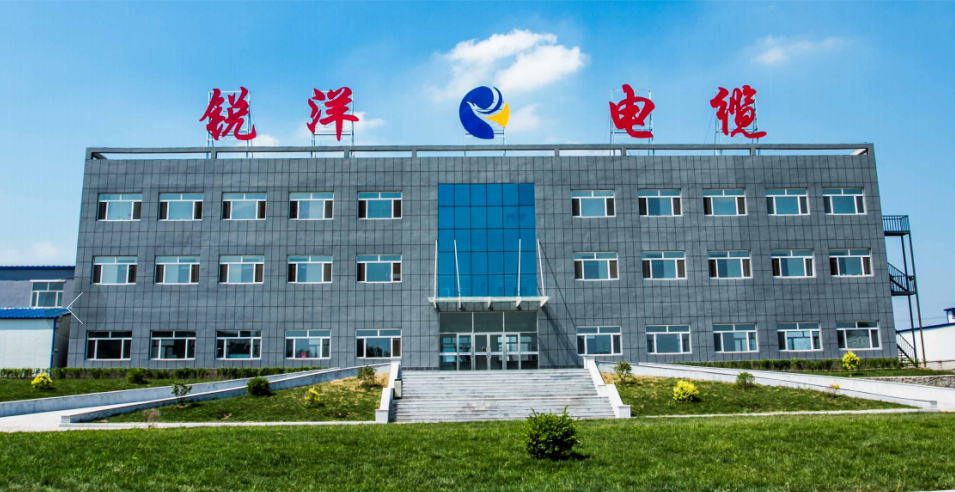
Ruiyang Group is a diversified industrial group focusing on wires and cables, power equipment, electrical installation, and electrical materials, while also engaged in organic agriculture. Ruiyang specializes in the R&D, design, construction, and operation services of power solutions for new energy fields such as wind, solar, nuclear, and energy storage. Its main products cover 30 categories, including power cables up to 220kV, mining cables, computer cables, control cables, fire-resistant cables, photovoltaic cables, special cables, and cable accessories, with tens of thousands of specifications.
LV and HV XLPE insulated power cable
PVC insulated power cable
Low-smoke, low halogen flame retardant cable
Fire-resistant cable
Aluminum alloy cable
Flexible cabtyre cable
Overhead cable
Control cable
Silicone rubber cable