


Why Marine Cables Need Extra Protection Against Salt
2026-06-08 16:41The sea is a harsh environment for any technology. For electrical cables that run underwater – connecting offshore wind farms, powering ships, linking islands, or supporting subsea sensors – the greatest enemy is not pressure or cold, but salt. Saltwater is highly corrosive, electrically conductive, and biologically active. A standard cable designed for dry land would fail within months in the ocean. Marine cables, therefore, require extra layers of protection specifically engineered to resist salt’s relentless attack. This article explains why salt is so destructive and how engineers fight back.
1. Salt + Water = An Electrolyte Bath
Pure water is a poor conductor. But when salt (sodium chloride) dissolves in water, it breaks into charged ions (Na⁺ and Cl⁻). These ions turn seawater into an electrolyte – a liquid that readily conducts electricity and accelerates corrosion.
If a tiny scratch or pinhole exposes the copper or aluminium conductor or the metallic armour of a cable, the saltwater completes an electrochemical cell. Metal ions dissolve away, leading to pitting, loss of strength, and eventual failure. This process is called galvanic corrosion when dissimilar metals are involved, or simply electrolytic corrosion even on a single metal.
2. Corrosion: The Slow Devourer
Corrosion eats away at the metallic parts of a marine cable:
Conductors – Copper corrodes to a greenish patina (copper chloride), increasing electrical resistance and generating heat.
Armour wires – Steel armour rusts rapidly in saltwater; rust expands and can split the outer sheath.
Shielding – Aluminium or copper braid/foil can dissolve, destroying electromagnetic protection.
Even stainless steel (e.g., 316 grade) can suffer pitting corrosion in stagnant, warm seawater if not properly passivated or cathodically protected. Only special alloys (e.g., titanium, super duplex, or coated materials) are truly resistant.
3. Insulation Degradation: Not Just Metal
Salt does not only attack metals. It also affects polymeric insulation and jackets over long periods:
Hydrolysis – Some polymers (polyesters, polyurethanes) break down chemically when exposed to saltwater, especially at higher temperatures.
Water treeing – In XLPE insulation, saltwater ingress accelerates the growth of water trees (micro‑cracks), which lead to electrical breakdown.
Plasticizer leaching – Flexible PVC loses plasticisers faster in saltwater, becoming brittle and cracked.
Therefore, marine cables use special salt‑resistant jacketing materials such as chlorinated polyethylene (CPE) , cross‑linked polyethylene (XLPE) , polyurethane (PUR) , or rubber compounds formulated for marine environments.
4. Biofouling: The Living Threat
Saltwater teems with life. Barnacles, mussels, algae, and tubeworms attach themselves to any submerged surface, including cable jackets. This is called biofouling. While not immediately destructive, heavy fouling causes several problems:
Added weight – Can pull a cable downward, increasing tension on connectors.
Abrasion – Sharp shells rub against the cable as currents move it, wearing through the jacket.
Localised corrosion – Under a barnacle, oxygen concentration differs, creating a corrosion cell.
To combat biofouling, marine cables often incorporate antifouling coatings (copper‑based or silicone‑based) or use smooth, low‑adhesion jackets that organisms cannot grip.
5. Mechanical Stresses: Salt Accelerates Fatigue
In the ocean, cables move with waves, tides, and currents. They bend, stretch, and vibrate. A dry cable might survive millions of such cycles. But saltwater can stress‑corrosion crack metals and accelerate fatigue in polymers. A small surface nick, when wetted by saltwater, becomes a crack starter. Over time, the crack grows until the armour or conductor breaks.
Marine cables therefore use tinned copper (copper coated with tin) to resist corrosion fatigue, and galvanised steel (zinc‑coated) or stainless steel armour that is less susceptible to crack growth in saltwater.
6. Electrical Problems: Salt as a Leakage Path
Saltwater is conductive. If the outer jacket is damaged, seawater can seep inside. That water provides a parallel conductive path between conductors or between a conductor and ground, causing:
Reduced insulation resistance – Leakage currents can trip protective relays.
Galvanic corrosion within the cable itself.
Partial discharge – Moisture inside terminations or joints initiates PD, leading to rapid failure.
Marine cables are therefore filled with water‑blocking compounds (gels or swellable tapes) and have fully sealed terminations to keep saltwater out at all costs.
7. How Engineers Protect Marine Cables – A Layered Defence
| Layer | Protection Provided |
|---|---|
| Conductor | Tinned or silver‑plated copper; sometimes solid aluminium with corrosion inhibitor. |
| Insulation | XLPE or EPR (salt‑resistant, low water absorption). |
| Water‑blocking | Swellable tapes, gels, or lead sheath to stop longitudinal water ingress. |
| Inner sheath | CPE, PUR, or lead alloy – resists moisture and mechanical damage. |
| Armour | Galvanised steel wires, stainless steel, or bronze – each with corrosion allowance. |
| Outer serving | Polypropylene yarn or asphalt‑impregnated jute – abrasion and biofouling resistance. |
| Antifouling coating | Copper or silicone‑based paint applied over the outer layer. |
This multi‑layer approach ensures that even if the outer layer is damaged, inner defences keep saltwater away from the critical conductor.
8. Testing for Saltwater Endurance
Marine cables are rigorously tested before deployment:
Salt spray test (ASTM B117) – Hundreds of hours in a salt fog chamber.
Immersion test – Cables submerged in heated, aerated synthetic seawater for months while electrically monitored.
Cyclic bend and tension – Simulating wave action while submerged.
Corrosion of armour – Measuring weight loss and tensile strength after exposure.
Only cables that pass these tests are certified for marine use (e.g., by DNV, ABS, or IEC 60794‑3).
9. Real‑World Consequence: Why You Cannot Use Land Cables at Sea
A standard PVC‑insulated, unarmoured, dry‑rated cable thrown into the ocean would:
Absorb water through the jacket (PVC is not fully watertight).
Corrode the copper conductor within weeks.
Become brittle from plasticizer leaching.
Be punctured by barnacles or fish bites.
Short out due to saltwater ingress into any scratch.
That is why submarine power cables and dynamic umbilicals for offshore platforms cost hundreds of dollars per metre – they are built to survive the sea for 25+ years.
Salt is a relentless enemy of electrical cables. It corrodes metals, degrades insulations, encourages biofouling, accelerates fatigue, and creates unwanted conductive paths. Marine cables cannot simply be “waterproof” – they must be salt‑proof. Through tinned conductors, water‑blocking layers, corrosion‑resistant armour, and antifouling jackets, engineers give cables the extra protection they need to operate reliably in the world’s most challenging environment. Next time you see a ship, an offshore wind turbine, or a coastal power line, remember: beneath the waves, special cables are fighting a constant battle against salt – and thanks to clever design, they are winning.
>>>>>>>Ruiyang Group's competitive product range includes:
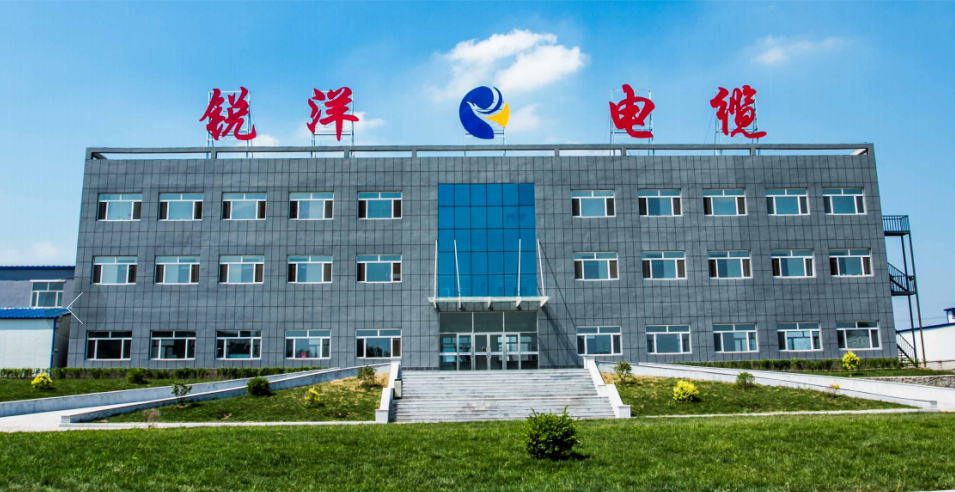
Ruiyang Group is a diversified industrial group focusing on wires and cables, power equipment, electrical installation, and electrical materials, while also engaged in organic agriculture. Ruiyang specializes in the R&D, design, construction, and operation services of power solutions for new energy fields such as wind, solar, nuclear, and energy storage. Its main products cover 30 categories, including power cables up to 220kV, mining cables, computer cables, control cables, fire-resistant cables, photovoltaic cables, special cables, and cable accessories, with tens of thousands of specifications.
LV and HV XLPE insulated power cable
PVC insulated power cable
Low-smoke, low halogen flame retardant cable
Fire-resistant cable
Aluminum alloy cable
Flexible cabtyre cable
Overhead cable
Control cable
Silicone rubber cable