



Partial Discharge: The Silent Killer of High Voltage Cables
2026-06-01 15:10High voltage cables are the arteries of modern power grids, carrying electricity across cities, under seas, and through mountains. They are built to last decades. Yet, many fail prematurely without any visible external damage. The culprit often hides inside the insulation: partial discharge (PD) . This phenomenon is called the “silent killer” because it erodes cable insulation from within, quietly and relentlessly, until one day the cable breaks down catastrophically. This article explains what partial discharge is, why it is so dangerous, and how engineers detect and prevent it.
1. What Is Partial Discharge?
A partial discharge is a small electrical spark that occurs inside a tiny void or defect within the insulation of a high voltage cable. Unlike a complete breakdown (a short circuit), a partial discharge does not immediately bridge the two conductors. Instead, it “partially” shorts out a small gas‑filled cavity.
Imagine a solid piece of plastic insulation with a microscopic air bubble trapped inside. When high voltage is applied, the electric field inside that bubble can become much stronger than in the surrounding material. If the field exceeds the dielectric strength of the gas, a tiny spark jumps across the bubble. That spark is a partial discharge.
Each discharge lasts only nanoseconds and releases a minute amount of energy. But over months and years, millions of such sparks erode the insulation, creating carbonised tracks, enlarging the void, and eventually leading to a complete electrical breakdown.
2. Why Is It Called the “Silent Killer”?
Partial discharge is silent for several reasons:
Inaudible – The discharges produce ultrasonic acoustic waves, but these are at frequencies far above human hearing (20–100 kHz). A human standing next to a PD‑active cable hears nothing.
Invisible – The sparks are tiny and buried inside insulation or deep within cable joints. You cannot see them.
Intermittent – PD often occurs only at certain points on the AC voltage wave (typically near the peak). It may come and go with load, temperature, or humidity.
Because PD does not cause immediate failure, it is easily ignored – until the cable suddenly explodes or trips a circuit breaker. That is why PD is called a “killer”: it kills reliability without warning.
3. Where Does Partial Discharge Occur?
PD typically originates at defects in the cable or its accessories (joints, terminations):
| Location | Typical Defect |
|---|---|
| Insulation void | An air bubble or inclusion from manufacturing. |
| Contamination | A metal particle, dust, or moisture inside the insulation. |
| Delamination | Separation between insulation layers or from the conductor. |
| Stress concentration | A sharp edge on a conductor or shield (e.g., poor cut at a termination). |
| Interface gap | Poor contact between factory‑molded parts of a joint. |
| Aged or wet insulation | Water trees in XLPE; they create conductive paths that trigger PD. |
In service, PD often starts at the shield cut in a termination (where the semi‑conductor layer ends) if stress control is inadequate. It also appears in joints with imperfect installation.
4. How Partial Discharge Destroys Insulation
Each partial discharge event is a tiny lightning bolt inside the void. It produces:
Heat – localized temperature spikes that carbonise the polymer.
UV radiation – breaks molecular bonds.
Ozone and nitrogen oxides – chemically attack the insulation walls.
Electron bombardment – physically erodes the surface.
Over time, the void grows larger and its walls become conductive (carbonised). The PD activity intensifies. Eventually, the entire insulation thickness is compromised, and a full breakdown occurs – a short circuit that can cause an arc flash, fire, or explosion.
The progression from first PD to failure can take months to years, depending on voltage, void size, and material.
5. Detecting Partial Discharge – Making the Silent Speak
Although PD is silent to our ears, it emits several telltale signals that engineers can detect with specialised instruments:
| Detection method | What it senses | Typical use |
|---|---|---|
| High‑frequency current transformer (HFCT) | Electrical pulses in the cable conductor or ground lead | Online monitoring in substations |
| Transient Earth Voltage (TEV) | Voltage spikes on the cable outer sheath | Field surveys of terminations |
| Ultrasonic sensor | Airborne or surface‑borne acoustic waves (20–200 kHz) | Pinpointing PD in switchgear or joints |
| Ultra‑high frequency (UHF) | Electromagnetic waves from PD inside GIS | Gas‑insulated substations |
| Optical detection | Light emitted from PD (rare, for lab use) | Research |
Portable PD detectors allow crews to scan cables and accessories without shutting down the power. They look for signals above a background noise threshold.
6. Measuring PD Severity
Engineers use three key metrics:
Apparent charge (pC – picocoulombs) – The amount of charge transferred per discharge. Higher charge = more energy. Below ~10 pC is often considered acceptable; above 100 pC may indicate serious defects.
Phase‑resolved partial discharge (PRPD) – A pattern showing when discharges occur relative to the AC voltage cycle. Different patterns reveal different types of defects (void, corona, surface discharge).
Number of discharges per cycle – Frequent discharges indicate rapid deterioration.
Regular testing (e.g., annually) can track whether PD is stable or growing.
7. Preventing Partial Discharge
The best way to deal with PD is to prevent it from starting:
Manufacturing quality – High‑purity materials, vacuum degassing to remove voids, smooth conductor surfaces.
Proper installation – Carefully preparing cable ends, using factory‑engineered stress control accessories, avoiding contamination.
Correct stress control – Using geometric cones, high‑permittivity (Hi‑K) layers, or non‑linear resistive materials at terminations and joints.
Avoiding over‑voltage – Surges from lightning or switching can initiate PD in marginally healthy cables.
For existing cables, PD monitoring can give early warning. When PD is detected, corrective actions may include reducing load, re‑terminating the cable, or replacing the affected section.
8. Real‑World Consequences
Case A: A 132 kV cable supplying a data centre failed at 3 AM, causing a 6‑hour outage. Post‑mortem analysis found PD activity from a small manufacturing void that had grown over 8 years. No routine PD testing had been performed.
Case B: A wind farm operator installed online PD monitors on their array cables. After 18 months, one monitor showed rising PD levels at a joint. Crews replaced the joint during a scheduled maintenance window, avoiding a catastrophic failure during peak production season.
These stories illustrate why PD is taken seriously – ignoring it can be very expensive.
9. The Future: Smart PD Monitoring
Modern technology is making PD detection cheaper and smarter:
Permanent sensors embedded in cable joints or terminations, connected to the internet of things (IoT).
AI‑based pattern recognition to classify defect types and predict remaining life.
Self‑powered sensors using inductive energy harvesting, requiring no batteries.
Smart grids that automatically reconfigure to reduce stress on cables with high PD activity.
These innovations promise to turn the silent killer into a manageable, predictable risk.
Partial discharge is the silent killer of high voltage cables because it gives almost no warning before final failure. Yet, its whispers are detectable: electrical pulses, ultrasonic noise, and electromagnetic emissions. By using PD testing as a routine health check, utilities and industrial operators can spot trouble early, plan repairs, and avoid catastrophic outages. In the world of high voltage engineering, silence is not golden – it is dangerous. The key is to listen before the cable screams.
>>>>>>>Ruiyang Group's competitive product range includes:
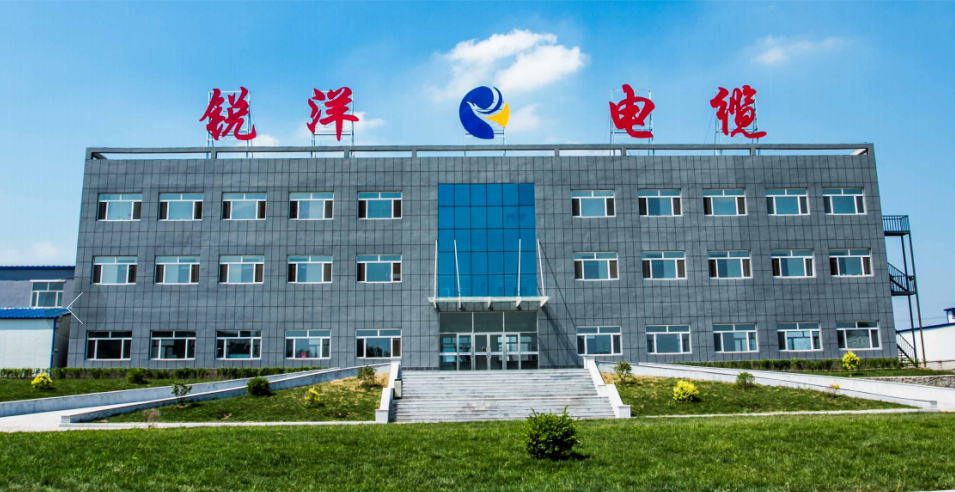
Ruiyang Group is a diversified industrial group focusing on wires and cables, power equipment, electrical installation, and electrical materials, while also engaged in organic agriculture. Ruiyang specializes in the R&D, design, construction, and operation services of power solutions for new energy fields such as wind, solar, nuclear, and energy storage. Its main products cover 30 categories, including power cables up to 220kV, mining cables, computer cables, control cables, fire-resistant cables, photovoltaic cables, special cables, and cable accessories, with tens of thousands of specifications.
LV and HV XLPE insulated power cable
PVC insulated power cable
Low-smoke, low halogen flame retardant cable
Fire-resistant cable
Aluminum alloy cable
Flexible cabtyre cable
Overhead cable
Control cable
Silicone rubber cable