


RVVP Flexible Shielded Cable: The Guardian of Signals in a Noisy World
2025-12-03 15:20In our modern environments, electrical signals face constant invisible threats. From the hum of industrial machinery and the buzz of switching power supplies to the pervasive signals from Wi-Fi and cellular networks, electromagnetic interference (EMI) and radio frequency interference (RFI) are omnipresent. For sensitive electronic equipment and control systems, this "electrical noise" can distort data, corrupt audio, trigger false readings, and ultimately cause system failures. This is where the RVVP flexible shielded cable plays a critical role. More than just a wire, it is a carefully engineered transmission line designed to protect signal integrity in the very environments that threaten it.
Anatomy of Protection: Deconstructing the RVVP Cable
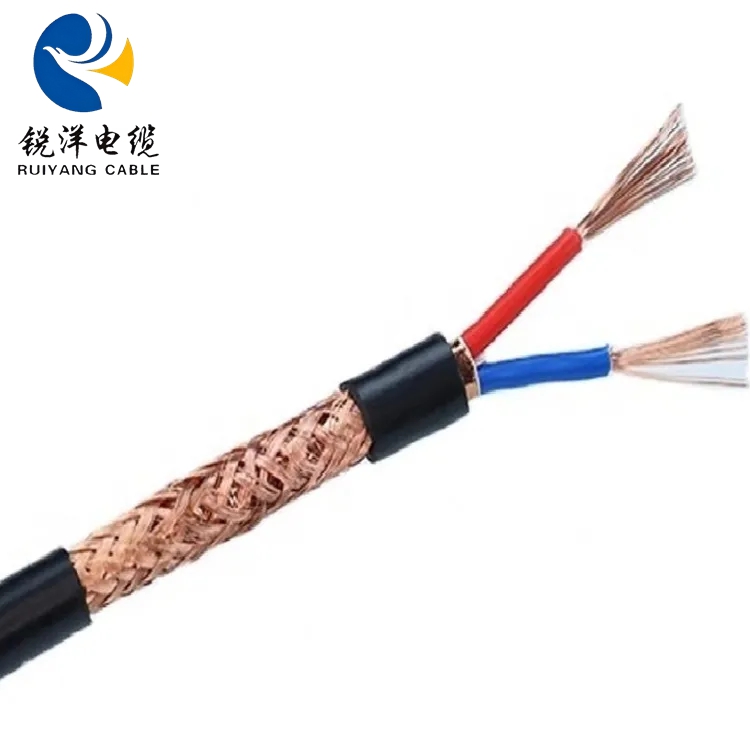
The effectiveness of RVVP cable lies in its multilayer construction, where each component serves a specific protective function.
The Core: Flexible Conductors. At its heart are multiple finely stranded, often tinned, copper conductors. The stranding provides exceptional flexibility, allowing the cable to be bent, routed through tight spaces, and used in applications with slight movement or vibration without breaking. The tinning prevents oxidation and improves solderability.
The First Defense: PVC Insulation. Each conductor is individually insulated with a layer of Polyvinyl Chloride (PVC). This primary insulation prevents short circuits between conductors and provides basic dielectric strength for the cable's voltage rating (commonly 300/500V).
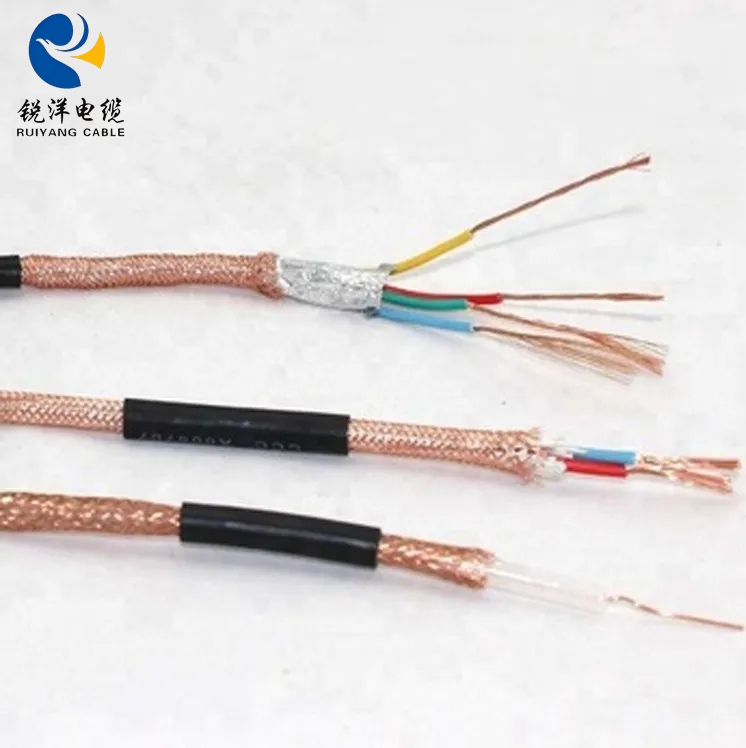
The Shield: The Braided Faraday Cage. This is the defining feature. A braid of tinned copper wires is woven concentrically around the bundle of insulated conductors. This braid acts as a Faraday cage, a conductive enclosure that blocks external electromagnetic fields. Interference is captured by the braid and safely diverted to ground via a drain wire or proper termination, preventing it from reaching the sensitive inner conductors. The braid also contains signals within the cable, preventing them from leaking out and causing interference to other devices.
The Outer Armor: PVC Sheath. The entire assembly is protected by an outer PVC sheath. This jacket provides mechanical protection against abrasion, cuts, and mild chemicals, and offers additional environmental resistance.
The Science of Shielding: How the Braid Works
The tinned copper braid shield operates on two key principles: Reflection and Absorption. When an external electromagnetic wave hits the braid, a portion of its energy is immediately reflected away due to the mismatch in impedance between air and the conductive shield. The remaining energy that penetrates is converted into tiny, harmless currents within the braid material itself, where it is dissipated as minimal heat. The effectiveness, or "shielding effectiveness," is measured in decibels (dB) and depends on the braid's coverage (typically 80-95%) and the conductivity of the material. A well-constructed braid can attenuate interference by 60 dB or more, meaning only 0.1% of the disruptive energy reaches the inner conductors.
Where Silence is Golden: Key Application Areas
RVVP cable is indispensable in any scenario where signal fidelity must be preserved in an electromagnetically "noisy" setting that also requires cabling flexibility.
Professional Audio & Broadcasting: Connecting microphones, instruments, and speakers in studios, live venues, and broadcast trucks, where it eliminates hum and buzz to ensure crystal-clear sound.
Industrial Instrumentation & Control: Wiring sensors (temperature, pressure), data acquisition systems, and control signals to PLCs in factories, where interference from large motors and drives is common.
Security & Surveillance: Transmitting video and power to PTZ cameras, especially over long runs where cables are parallel to power lines, preventing "snow" or stripes on the video feed.
Medical & Laboratory Equipment: Interconnecting sensitive diagnostic and monitoring devices where electrical noise can lead to inaccurate readings.
Computer Networking & Telecommunications: Used in specific scenarios for shielded patch cords or connections in areas of high EMI, protecting data integrity.
Installation Best Practices: Maximizing Shield Performance
A shield is only as good as its installation. Proper practices are crucial:
Grounding: The braid must be properly grounded at one end (typically the source end) to provide a path for intercepted noise to drain away. Grounding at both ends can create "ground loops," which induce new interference.
Termination: Use connectors designed for shielded cables. The braid should maintain 360-degree contact with the connector's shield shell, often using a crimp ferrule, to preserve the continuous Faraday cage.
Handling: Avoid over-stretching or severely crushing the cable, which can tear the braid and create gaps in shielding coverage.
In an increasingly electrified and wirelessly connected world, managing electromagnetic compatibility (EMC) is paramount. The RVVP flexible shielded cable is a fundamental tool in this effort. By understanding its construction, the science behind its braided shield, and its proper application, engineers, technicians, and installers can ensure that critical signals are transmitted with clarity and reliability. It is the robust, flexible, and intelligent solution for ensuring that our connected systems communicate effectively, free from the disruptive chatter of the electronic world around them.