


The Workhorse of Industry: A Guide to Rubber-Sheathed Cables
2025-12-08 14:32In the controlled environments of offices and homes, standard PVC-sheathed cables reign supreme. But step onto a factory floor, a construction site, a mining operation, or a dockyard, and you encounter a harsher reality: extreme temperatures, constant flexing, crushing forces, oils, chemicals, and abrasion. This is the domain of the rubber-sheathed cable. More than just a wire, it is a robust, flexible, and highly resilient tool engineered to deliver power and control where ordinary cables would rapidly fail. Its unique material properties make it the indispensable lifeline for mobile equipment and harsh-environment installations.
The Anatomy of Durability: Materials and Construction
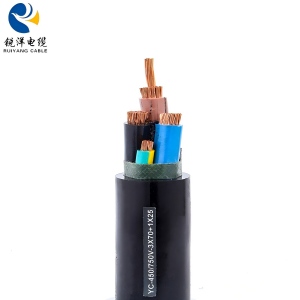
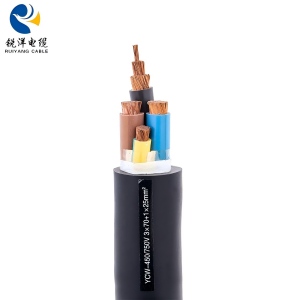
The superiority of a rubber-sheathed cable lies in its layered, purpose-built design:
Conductor: Finely stranded, high-purity copper (often tinned) provides exceptional flexibility and conductivity, allowing the cable to withstand repeated bending without breaking.
Insulation: The core is insulated with a specialized rubber compound, typically Ethylene Propylene Rubber (EPR) or similar synthetic rubber. Unlike thermoplastics, EPR is a thermoset material, meaning it cross-links during curing. This gives it superior resistance to heat (often rated for 90°C continuous operation), ozone, and aging, maintaining flexibility even in extreme cold.
Sheath: The defining feature is the outer sheath made of heavy-duty, weather-resistant rubber. This isn't ordinary rubber but a compounded material designed for specific hazards:
Oil & Chemical Resistance: Formulated to resist swelling, softening, or degradation from oils, greases, and acids.
Weather & UV Resistance: Contains additives to withstand sunlight, ozone, and wide temperature fluctuations.
Mechanical Protection: Provides excellent resistance to abrasion, cuts, tearing, and crushing impacts.
Key Families: Understanding the "Y" Series
Rubber-sheathed cables are often identified by codes starting with "Y". Common types include:
YC / YCW: The classic industrial flexible cable. YC is for general use, while YCW features a weather- and oil-resistant sheath ("W" for weather), making it suitable for outdoor and harsh industrial environments.
YZ / YZW: Designed for lighter applications with lower voltage ratings (300/500V), often used for portable tools, lighting, and small appliances.
YE: Used for applications requiring extreme, constant flexing, such as on cable reels or automated machinery tracks.
YH: Specifically rated for even higher ambient temperatures found near furnaces or in high-heat industrial processes.
Where Rubber Meets the Road: Core Applications
The unique properties of rubber-sheathed cables make them the only choice for demanding scenarios:
Mobile Machinery & Equipment: Powering portable heavy tools, welding machines, construction cranes, excavators, and conveyor systems.
Mining & Quarrying: As trailing cables for mining equipment, where resistance to abrasion, crushing, and moisture is critical.
Industrial Plant Maintenance: For temporary power distribution, maintenance equipment, and connections in areas exposed to oils and coolants.
Marine & Dockyards: On ships and docks, where cables face saltwater, UV exposure, and constant mechanical handling.
Stage & Event Production: Powering lighting rigs and sound equipment that requires durable, flexible cabling for frequent setup and teardown.
Advantages and Trade-offs: Why Choose Rubber?
Choosing a rubber-sheathed cable involves weighing its clear benefits against practical considerations:
Pros:
Unmatched Flexibility & Durability: Survives repeated bending, twisting, and mechanical abuse.
Excellent Environmental Resistance: Performs in extreme temperatures, moisture, UV, oils, and chemicals.
High Safety & Reliability: Robust construction reduces risk of short circuits, insulation failure, and fire in hazardous conditions.
Cons:
Higher Cost: Material and manufacturing costs are significantly higher than standard PVC cables.
Greater Weight & Bulk: The thick, durable sheath makes the cable heavier and less space-efficient.
Specialized Termination: May require specific glands and connectors to properly secure and seal the cable entry.
Rubber-sheathed cables are not a commodity product but a critical engineering component. They are selected not for convenience, but for necessity—where failure would mean downtime, danger, or significant cost. By understanding their construction, types, and ideal applications, engineers and technicians can ensure that power reaches the places it's needed most, reliably and safely. In the demanding theater of industry and heavy-duty application, the rubber-sheathed cable stands as the tough, flexible, and utterly dependable workhorse.
>>> Ruiyang Group's main Rubber-Sheathed Cable