


The Future of Cables: Self‑Healing and Smart Materials
2026-06-10 17:21For over a century, electrical cables have been passive components: they carry current, but they cannot sense damage, report problems, or repair themselves. That is changing. Researchers and engineers are now developing self‑healing materials and smart cable technologies that could revolutionise power distribution, data transmission, and safety. Imagine a cable that automatically seals a tiny crack before water enters, or a cable that tells you exactly where it is about to fail. This is not science fiction – it is the near future. This article explores the exciting innovations that will make cables smarter, safer, and longer‑lasting.
1. What Is a Self‑Healing Cable?
A self‑healing cable can automatically repair minor damage – such as a small cut in the insulation, a crack from aging, or a scratch that could allow moisture ingress. Inspired by biological systems (like human skin healing a wound), engineers have developed two main approaches:
Microcapsule‑based healing – Tiny capsules containing a liquid healing agent (monomer or resin) are embedded in the insulation or jacket. When a crack forms, it ruptures nearby capsules, releasing the liquid. The liquid fills the crack and polymerises (hardens), sealing the damage.
Intrinsic (reversible) healing – The polymer itself is designed with dynamic chemical bonds that can break and reform when heat is applied (either externally or from a current fault). The material flows into the crack and rebonds, restoring integrity.
Both methods are still mostly in the laboratory or early commercial stage, but they promise to dramatically extend cable life, especially in hard‑to‑reach locations (underground, underwater, inside walls).
2. How Self‑Healing Works in Practice
Microcapsule example: A cable jacket contains millions of microcapsules (50–200 micrometres wide). A rock presses against the buried cable, creating a tiny crack. Capsules in the crack break open, releasing a liquid called dicyclopentadiene (DCPD). A catalyst (also embedded) triggers polymerization, turning the liquid into a solid polymer that seals the crack – in minutes or hours. The repair is permanent and prevents water ingress.
Intrinsic example: A polymer with reversible Diels‑Alder bonds is used as insulation. When a crack forms, the cable is locally heated (e.g., by a short current pulse or an external heater). The bonds break, the material becomes mobile, flows into the crack, and then rebonds upon cooling. This can be repeated many times.
Current challenges: healing larger cracks, maintaining electrical properties after multiple healing cycles, and keeping costs low enough for mass production.
3. Smart Cables: More Than Just Wires
A smart cable contains embedded sensors or uses the cable itself as a sensor to monitor its own health. These cables can detect:
Temperature – Distributed temperature sensing (DTS) using fibre optics inside the cable.
Strain (bending or pulling) – Fibre Bragg gratings (FBG) or electrical time‑domain reflectometry (TDR).
Moisture ingress – Sensors that change electrical resistance when wet.
Partial discharge – Built‑in high‑frequency sensors to detect the early signs of insulation failure.
Local damage (cuts, crushing) – Acoustic or vibration sensors.
Data from these sensors is transmitted in real time to a control room, allowing predictive maintenance – fixing a problem before it causes an outage.
4. Fibre Optic Sensing: The Backbone of Smart Cables
Many smart cables incorporate a fibre optic strand alongside the power conductors. This fibre can be used for:
Distributed temperature sensing (DTS) – A laser pulse is sent down the fibre; the backscattered light changes with temperature. By measuring the time delay, the system can map temperature every metre along the cable – pinpointing hot spots from overloads or loose connections.
Distributed acoustic sensing (DAS) – Detects vibrations (from digging, vehicle movement, or cable faults) with high precision. This can warn of excavation near buried cables.
Strain and bend monitoring – Fibre Bragg gratings (FBGs) reflect specific wavelengths that shift when the fibre is stretched or bent. An array of FBGs provides a strain profile.
These fibres are passive (no electricity needed) and immune to electromagnetic interference, making them ideal for integration into power cables.
5. Smart Materials for Cable Jackets
Beyond sensing, researchers are developing smart materials that change properties in response to stimuli:
Colour‑changing jackets – A polymer that turns from black to red when overheated, giving a visual warning to maintenance crews.
Conductive polymers that change resistance with pressure or temperature, acting as a distributed sensor.
Shape‑memory polymers – A jacket that can be heat‑activated to tighten around a connector or seal a breach.
Hydrophobic self‑cleaning surfaces – Inspired by lotus leaves, these repel water and dirt, reducing the need for cleaning in polluted areas.
These materials are already appearing in experimental cables and may enter commercial products within the next decade.
6. Real‑Time Monitoring and Predictive Maintenance
Smart cables, combined with the Internet of Things (IoT) and cloud analytics, enable predictive maintenance. Instead of replacing cables on a fixed schedule (time‑based), utilities can replace them only when needed (condition‑based). Benefits:
Reduced outages – Fix problems before they cause failure.
Lower maintenance costs – No unnecessary replacements.
Improved safety – Early warning of fire hazards or partial discharge.
Optimised loading – Operators can safely push cables closer to their limits knowing real‑time temperature.
Early adopters (e.g., offshore wind farms, data centres, metro systems) are already deploying smart cable monitoring.
7. Challenges and Roadblocks
Despite the promise, several hurdles remain:
Cost – Adding sensors, fibres, or self‑healing microcapsules increases cable price by 20–100% or more.
Longevity – Will microcapsules survive 30 years of heat and vibration without breaking prematurely? Will dynamic bonds withstand repeated healing?
Standardisation – No common protocols for smart cable data; each manufacturer has its own system.
Installation complexity – Fibre optic connectors require more skill than standard cable joints.
Nevertheless, as costs fall and reliability improves, these technologies will become standard for critical infrastructure.
8. Future Applications
Undersea power links – Self‑healing insulation could repair small cracks caused by fishing trawlers. Smart fibres would pinpoint damage locations for repair crews.
Aerospace wiring – Aircraft have kilometres of wires; self‑healing jackets could prevent chafing failures. Smart sensors would reduce inspection times.
Building wiring – Smart cables could alert homeowners or facility managers to overloaded circuits before a fire starts.
Electric vehicle charging cables – Self‑healing outer jackets would resist abrasion from dragging on pavement.
Robotic and dynamic cables – In robots or wind turbines, smart cables could monitor flex life and predict when replacement is needed.
9. The Long View: Truly Autonomous Cables
In the distant future, cables might not only heal themselves but also reconfigure – rerouting power around a damaged section, or communicating their own specifications to a smart grid. Energy harvesting from stray magnetic fields could power the embedded sensors, eliminating batteries. Such cables would be true partners in an intelligent, resilient grid.
The future of cables is active, intelligent, and self‑repairing. Self‑healing materials inspired by biology will seal tiny cracks before they become failures. Fibre optic sensors and smart jackets will turn every metre of cable into a real‑time health monitor. While these technologies are still emerging, they promise to slash maintenance costs, prevent catastrophic outages, and extend cable life far beyond today’s limits. The humble cable, once a passive piece of copper and plastic, is becoming a smart, responsive component of the electrical grid – a quiet revolution that will keep our world powered more safely and reliably.
>>>>>>>Ruiyang Group's competitive product range includes:
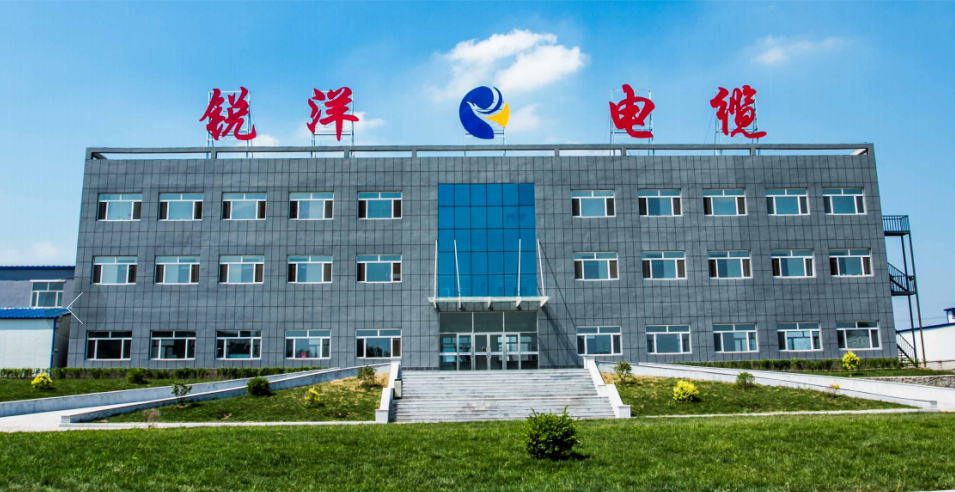
Ruiyang Group is a diversified industrial group focusing on wires and cables, power equipment, electrical installation, and electrical materials, while also engaged in organic agriculture. Ruiyang specializes in the R&D, design, construction, and operation services of power solutions for new energy fields such as wind, solar, nuclear, and energy storage. Its main products cover 30 categories, including power cables up to 220kV, mining cables, computer cables, control cables, fire-resistant cables, photovoltaic cables, special cables, and cable accessories, with tens of thousands of specifications.
LV and HV XLPE insulated power cable
PVC insulated power cable
Low-smoke, low halogen flame retardant cable
Fire-resistant cable
Aluminum alloy cable
Flexible cabtyre cable
Overhead cable
Control cable
Silicone rubber cable