

From Copper Ore to Cable: A Brief Manufacturing Journey
2026-06-09 17:30Every time you flip a light switch, charge your phone, or turn on a motor, you rely on a network of copper cables. But have you ever wondered how that shiny red metal inside a wire goes from a lump of rock in the ground to the flexible, insulated conductor in your wall? The journey from copper ore to finished cable is a fascinating blend of geology, chemistry, and precision engineering. This article takes you through the main steps of that transformation.
1. Mining: Extracting the Ore
Copper rarely occurs as pure metal in nature. Instead, it is found in mineral ores, most commonly as chalcopyrite (copper iron sulfide). Large open‑pit mines (e.g., in Chile, Peru, or the US) blast and excavate tons of rock. The ore typically contains only 0.5–2% copper – so a huge amount of rock must be moved to get a little copper.
The mined ore is crushed into a fine powder, then concentrated by a process called froth flotation. The copper minerals attach to air bubbles and float to the top, while waste rock (tailings) sinks. The result is a fine powder called copper concentrate, which contains about 25–35% copper.
2. Smelting: Turning Concentrate into Copper Matte
The concentrate is dried and then fed into a high‑temperature furnace (over 1200°C). Here, it reacts with oxygen and silica. The iron in the ore combines with silica to form a slag (waste), while the copper and sulfur form a mixture called copper matte (about 60–70% copper). The matte is tapped from the bottom of the furnace.
The smelting process releases sulfur dioxide (SO₂), which must be captured to make sulfuric acid, reducing environmental pollution.
3. Converting: From Matte to Blister Copper
The copper matte is transferred to a converter – a large cylindrical furnace. Oxygen is blown through the molten matte, oxidizing the remaining iron and sulfur. The iron forms slag; the sulfur escapes as SO₂. What remains is blister copper – about 98–99% pure, with a rough, blister‑like surface (from escaping gas bubbles). Blister copper is still too impure for electrical applications.
4. Fire Refining and Electrolytic Refining: Achieving Purity
For electrical use, copper must be 99.9% pure or better. Impurities (like iron, lead, zinc, nickel, and arsenic) reduce conductivity dramatically.
Fire refining melts blister copper and blows air through it to oxidise impurities, which are then skimmed off. This raises purity to about 99.5%.
Electrolytic refining achieves the final high purity. Anodes of fire‑refined copper and thin stainless steel cathodes are placed in a tank of copper sulfate‑sulfuric acid solution. An electric current is passed: copper from the anode dissolves and plates onto the cathodes as 99.99% pure copper. Impurities fall to the bottom as anode slime (which contains valuable metals like gold and silver, recovered separately).
The result is electrolytic cathode copper – the starting material for wire production.
5. Casting: Making Wire Rods
The cathode copper is melted in a furnace and cast into a continuous copper wire rod, typically 8–20 mm in diameter. Two main methods:
Continuous casting and rolling – molten copper is poured into a caster, then immediately passed through rolling mills to produce a rod. This is the most efficient method.
Upwards or continuous casting – for smaller production volumes.
The rod is cooled, coiled, and inspected for surface defects. These coils can weigh several tonnes.
6. Drawing: Pulling the Rod into Thin Wire
The thick wire rod is pulled through a series of dies (hard metal plates with tiny holes) to reduce its diameter. This is called wire drawing. Each die reduces the diameter slightly; the wire is stretched and becomes longer. To prevent breakage, the wire is lubricated and cooled.
Depending on the final use, the wire may be drawn down to diameters as small as 0.05 mm (hair‑thin). For household wiring, typical diameters are 1–2.5 mm. As the wire is drawn, it becomes work‑hardened and brittle.
7. Annealing: Restoring Flexibility
Work‑hardened copper is hard and brittle – not suitable for bending. To make it soft and flexible, the wire is annealed: heated to about 400–650°C in a protective atmosphere (to prevent oxidation) and then slowly cooled. This recrystallises the metal grains, restoring ductility. After annealing, the wire is soft and can be easily bent or twisted.
Annealing may be done in‑line after drawing or in separate furnaces.
8. Stranding: Building Flexible Conductors
For most cables, a single solid wire is too stiff. Instead, multiple thin wires are stranded (twisted together) to form a flexible conductor. Stranding is done on machines that twist the wires around a central core. The number of strands and the lay direction (left‑hand or right‑hand) affect flexibility and electrical properties.
For very large cables (e.g., power feeders), compact stranding or Milliken construction (segmental conductors) is used to reduce skin effect and improve current capacity.
9. Insulation Application: Adding the Plastic Layer
The bare conductor must be electrically isolated from its surroundings. This is done by extruding a layer of insulation (usually thermoplastic or thermoset polymer) over the conductor. Common materials:
PVC – cheap, flame‑retardant, for low‑voltage.
XLPE – cross‑linked polyethylene, for medium/high voltage, high temperature rating.
EPR – rubber, for flexible cables.
The conductor passes through an extruder head where molten plastic is wrapped around it, then cooled in a water trough. Insulation thickness is precisely controlled.
10. Cabling, Shielding, and Jacketing
For multi‑core cables, several insulated conductors are cabled (twisted together) – often with fillers to keep the cable round. Depending on the application, additional layers are added:
Shielding – copper tape or braid to protect against electromagnetic interference (EMI).
Armour – steel wires or tape for mechanical protection (buried or submarine cables).
Water‑blocking – swellable tapes or gels to prevent moisture ingress.
Finally, an outer jacket (sheath) is extruded over everything. This jacket provides mechanical protection, UV resistance, and flame retardancy. The finished cable is coiled onto drums, tested for electrical and mechanical properties, and shipped to customers.
11. Quality Control: Testing Every Batch
Throughout the journey, rigorous testing ensures the cable meets standards (e.g., IEC, ASTM, BS). Tests include:
Conductor resistance – to verify conductivity.
Insulation resistance – to ensure no leakage.
High‑voltage withstand – to check dielectric strength.
Tensile and elongation – for mechanical robustness.
Only cables that pass these tests are released for sale.
The journey from copper ore to finished cable is long and highly engineered. It spans continents – from a mine in the Andes to a smelter, a refinery, a drawing mill, and an extrusion line in a factory. Each step adds value, transforms properties, and ensures that the final product can safely carry electricity for decades. Next time you hold a piece of electrical wire, take a moment to appreciate the immense industrial process that turned a lump of rock into a lifeline of modern civilization.
>>>>>>>Ruiyang Group's competitive product range includes:
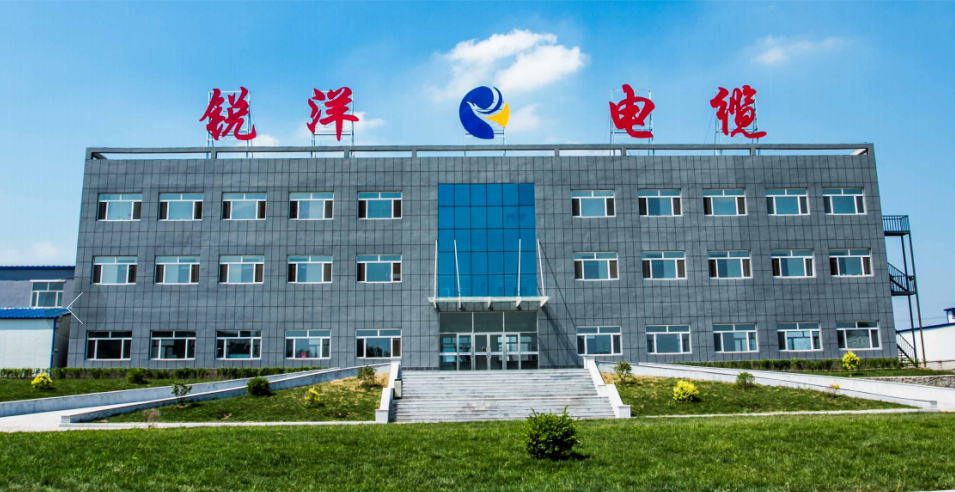
Ruiyang Group is a diversified industrial group focusing on wires and cables, power equipment, electrical installation, and electrical materials, while also engaged in organic agriculture. Ruiyang specializes in the R&D, design, construction, and operation services of power solutions for new energy fields such as wind, solar, nuclear, and energy storage. Its main products cover 30 categories, including power cables up to 220kV, mining cables, computer cables, control cables, fire-resistant cables, photovoltaic cables, special cables, and cable accessories, with tens of thousands of specifications.
LV and HV XLPE insulated power cable
PVC insulated power cable
Low-smoke, low halogen flame retardant cable
Fire-resistant cable
Aluminum alloy cable
Flexible cabtyre cable
Overhead cable
Control cable
Silicone rubber cable