


Cold Shrink for Cable Repair: Speed Matters
2026-03-27 09:32In the world of critical infrastructure, time is measured not in minutes but in money, safety, and reputation. When a power cable fails—whether from excavation damage, insulation breakdown, or external impact—every minute of downtime carries a cost. For hospitals, data centers, airports, and industrial facilities, these costs can reach thousands of dollars per minute. In these high-stakes scenarios, cold shrink cable repair technology has emerged as a critical tool, offering rapid restoration capabilities that other methods cannot match. This article explores why speed matters in cable repair and how cold shrink technology delivers it.
1. The Cost of Downtime: Why Every Minute Counts
Before examining the technology, one must understand what is at stake. Cable failures are inevitable in any power network, but the consequences vary dramatically by application.
Hospitals and Healthcare Facilities
In a hospital, a power outage is not merely an inconvenience—it is a threat to life. Operating rooms, intensive care units, life support systems, and critical diagnostic equipment require uninterrupted power. Backup generators provide temporary relief, but they are not designed for extended operation. Every minute of cable repair translates to heightened risk for patients and increased stress on emergency systems.
Data Centers and Digital Infrastructure
Modern data centers consume enormous amounts of power and demand near-perfect reliability. Industry studies indicate that data center downtime costs average between $5,000 and $9,000 per minute, with some high-density facilities exceeding $20,000 per minute. When a cable feeding a data center fails, the financial impact is immediate and compounding—lost transactions, service level agreement penalties, and reputational damage.
Industrial Facilities
Manufacturing plants, refineries, and processing facilities face similar pressures. A single hour of downtime in an automotive assembly plant can cost over $1 million. Chemical plants may face safety risks if critical systems lose power. In these environments, every minute of cable repair directly affects the bottom line.
Public Infrastructure
Airports, transit systems, water treatment plants, and emergency services all depend on continuous power. A cable failure affecting a subway system during rush hour can strand thousands of passengers; a water treatment plant outage can threaten public health.
2. Traditional Repair Methods: The Speed Challenge
Conventional cable repair technologies face inherent speed limitations that make rapid restoration difficult.
Heat Shrink Systems
Heat shrink joints require careful preparation, positioning, and then controlled heating. The heating process itself takes time, but more significantly, the installation demands that the installer achieve precise temperature control—too little heat leaves gaps, too much risks damaging the cable. The process is skill-dependent, and quality cannot be rushed. A typical heat shrink joint installation requires 60 to 90 minutes, not including setup and testing.
Tape-Built Systems
Traditional tape-built joints represent the slowest option. The installer must apply layers of semi-conductive tape, insulation tape, and shielding tape in precise sequences, often with specific tension requirements. The process can take two to three hours for a skilled jointer—and significantly longer for less experienced personnel. Quality depends entirely on individual technique, making consistent, rapid installation difficult.
Resin and Potting Systems
Some jointing systems rely on two-part resins that must be mixed and poured, then allowed to cure. Even with fast-curing formulations, cure times range from 30 minutes to several hours. During this period, the joint cannot be handled, backfilled, or energized. For critical repairs, this waiting time is unacceptable.
3. The Cold Shrink Advantage: Speed by Design
Cold shrink technology approaches speed as a design parameter, not merely an operational benefit. Several factors combine to enable rapid installation.
No Heat Required
Eliminating the need for external heat sources removes the single greatest variable in installation time. There is no waiting for heat guns or torches to reach temperature, no careful heating to avoid under- or over-shrinking, and no cooling period. The installation proceeds at the pace of the installer, not the equipment.
No Adhesive Cure Time
While many cold shrink joints incorporate sealing mastics or adhesives, these materials do not require cure time before the joint can be energized. The mechanical pressure of the cold shrink elastomer provides immediate sealing and electrical integrity. Adhesive curing occurs over time but is not a prerequisite for restoration.
Single-Piece Construction
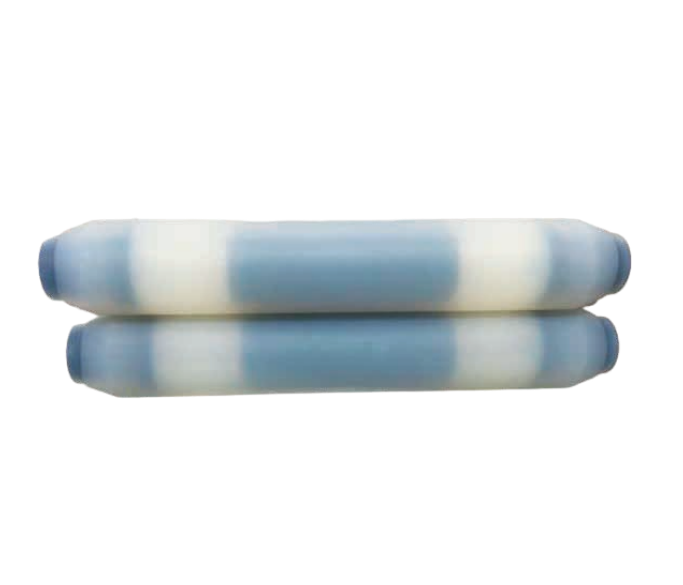
Cold shrink joints are typically single-piece components. The installer prepares the cable ends, positions the joint over the prepared area, and removes the spiral core. There is no assembly of multiple layers, no positioning of separate stress control components, and no risk of omitting critical elements. This simplicity translates directly to speed.
Predictable Process
Because cold shrink installation follows a consistent, repeatable process, installers develop efficiency through practice. The steps are the same for every installation—cable preparation, positioning, core removal. There are no variables that require judgment calls, no techniques that vary by installer experience.
4. The Installation Timeline: What 30 to 45 Minutes Looks Like
A typical cold shrink joint installation follows this timeline:
Cable Preparation (15-20 minutes)
The damaged section is exposed, cleaned, and cut back to sound cable. Sheaths, shields, and insulation are stripped to precise dimensions. This step is common to all jointing methods—cold shrink does not eliminate the need for careful preparation.
Positioning (5-10 minutes)
The cold shrink joint body is slid over one cable end, the conductors are crimped or connected, and the joint body is positioned over the connection. Alignment marks ensure proper placement.
Core Removal (2-5 minutes)
The installer unwinds the spiral core, allowing the elastomer to contract uniformly onto the cable. This step takes seconds but requires careful handling to ensure even contraction.
Grounding and Sealing (5-10 minutes)
Ground connections are made, and any external sealing or armor restoration is completed. With some designs, this is integrated into the cold shrink component.
Total time: 30 to 45 minutes from start to energization-ready condition.
5. Beyond Speed: Reliability at Speed
Speed alone is insufficient if the repair compromises reliability. Cold shrink technology delivers both rapid installation and long-term performance.
Consistent Quality
Because cold shrink relies on factory-engineered components rather than installer skill, the quality of the repair is consistent regardless of who performs it. This consistency means that a rapid emergency repair is as reliable as a carefully scheduled installation.
Proven Longevity
Cold shrink materials—silicone and EPDM—have decades of field service demonstrating their durability. A cold shrink joint installed in an emergency will provide the same 30-year service life as one installed under ideal conditions.
Immediate Energization
Cold shrink joints can be energized immediately after installation. There is no waiting for adhesives to cure, no cooling period, no uncertainty about whether the installation is ready. When the repair is complete, power can be restored.
6. Real-World Applications: Where Speed Matters Most
Data Center Feeders
When a 35kV feeder cable to a data center is damaged by nearby construction, every minute of outage costs thousands. A cold shrink repair crew can arrive, excavate, install the joint, and restore power in under two hours—compared to four to six hours with traditional methods.
Hospital Emergency Repairs
A hospital may have backup generation, but prolonged operation on emergency power stresses systems and introduces risk. Cold shrink technology enables restoration before backup fuel reserves are depleted, returning the facility to normal operation quickly.
Industrial Facility Production Lines
In continuous process industries, a cable failure can shut down an entire production line. Cold shrink repairs minimize downtime, preserving production schedules and avoiding costly restart procedures.
Storm Restoration
After severe weather, utility crews face hundreds of repairs. Cold shrink technology enables each crew to complete more repairs per shift, accelerating overall restoration for affected communities.
7. Preparing for Speed: The Role of Inventory and Training
Rapid repair requires more than fast technology—it requires preparedness.
Inventory Strategy
Utilities and large facilities maintain stocks of cold shrink joints in common cable sizes and voltage classes. Unlike heat shrink with indefinite shelf life, cold shrink products have finite shelf lives (typically 2-5 years), requiring active inventory management. However, the investment in maintained inventory is justified by the ability to respond instantly when failures occur.
Crew Training
While cold shrink installation is simpler than tape-built systems, it still requires proper training. Crews must understand cable preparation requirements, positioning accuracy, and the technique for removing the spiral core without disturbing alignment. Regular practice ensures that when an emergency occurs, the repair proceeds smoothly.
Kit Completeness
Cold shrink joint kits include all necessary components—connectors, cleaning materials, abrasives, and the joint body itself. Kits are factory-sealed and remain intact until needed, eliminating the risk of missing components during emergency repairs.
8. Economic Analysis: Speed as an Investment
The higher upfront cost of cold shrink materials compared to heat shrink alternatives is often offset by the value of reduced outage time.
Consider a data center with downtime cost of $10,000 per minute. A repair that takes 30 minutes instead of 90 minutes saves 60 minutes of outage—$600,000 in avoided costs. The premium for cold shrink materials is negligible by comparison.
For utilities, the equation is similar. Faster repairs mean fewer customer minutes interrupted, better regulatory metrics, and improved customer satisfaction. The value of speed consistently exceeds the material cost differential.
9. Limitations: When Speed Must Be Tempered
While cold shrink enables rapid repair, certain constraints remain:
Cable Preparation Cannot Be Rushed
The cable must be properly cleaned, stripped, and dimensioned. Rushing this step compromises the interface quality regardless of the joining technology.
Environmental Conditions
Extreme cold may require warming accessories before installation. This adds time but is essential for proper performance.
Complex Configurations
Multi-core cables, armored constructions, or unusual cable types may require additional steps that extend installation time.
Testing Requirements
Commissioning tests—insulation resistance, high voltage withstand, partial discharge—must be performed regardless of the repair technology. These tests add time but are essential for safety and reliability.
In emergency cable repair, speed is not merely a convenience—it is a critical parameter that directly affects safety, revenue, and public confidence. Cold shrink technology addresses this reality by delivering reliable, high-quality joints in a fraction of the time required by traditional methods.
The 30 to 45 minute installation time represents more than a technical specification. It means hospitals can return to normal operation before backup systems reach their limits. Data centers can resume transactions before financial losses escalate. Industrial facilities can restart production lines before schedules slip. Utility crews can restore more customers faster after storms.
Cold shrink technology demonstrates that speed and reliability are not opposing goals—they can be achieved together through intelligent engineering. By eliminating heat, eliminating cure times, and simplifying the installation process, cold shrink enables the rapid restoration that modern infrastructure demands. In the critical moments after a cable failure, when every minute carries weight, cold shrink delivers the one thing that matters most: time.
>>>>>>>>>>Ruiyang Group's Cable Accessories<<<<<<<<<<<
Integral Prefabricated (Dry) Cable Termination
35kV Cold Shrink Intermediate Joint
10kV Cold Shrink Intermediate Joint
Heat-Shrinkable Cable Accessories
Dry Type GIS (Plug-in) Termination